

"The obvious answer is speculative short selling, probably by institutional investors who prefer to trade futures, some of which may be proxy hedging for investors whose money is locked up, bet or not available," Solot said.
Solot said the reversal may also reflect the liquidation of positions by hedge funds. Exchanges or trading desks that hold bitcoins for clients may temporarily sell them to reinvest the proceeds and use futures to hedge against price increases. Investors have been nervous since the FTX crash, and some of these trades may be being unwound as clients withdraw money.
"In order to unwind the trade, exchanges and trading platforms would need to sell futures and buy back physical bitcoin, possibly in the over-the-counter market, reversing the curve," Solot said.
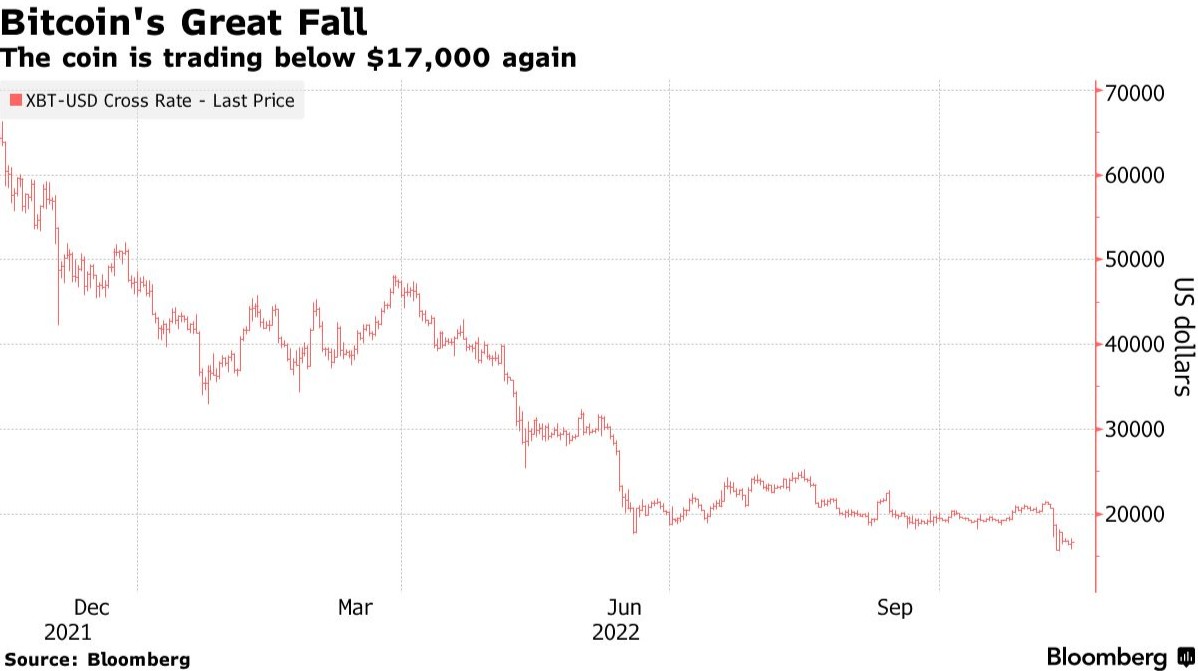
It's worth noting that the cryptocurrency market is experiencing a historic swing as once popular digital asset exchange FTX filed for bankruptcy last week. The price of Bitcoin, the largest token, fell more than 20% last week to around $16,500. That compares with nearly $69,000 a year ago.
In addition, Ethereum has lost about a quarter of its value, while the FTX token, FTT, has lost about 95% of its value, trading around $1.60, according to the data.